
 Tiếng Việt
 Русский
POLICY
How Fruits Help Keep Skin Healthy and Beautiful?
May
How Fruits Help Keep Skin Healthy and Beautiful?
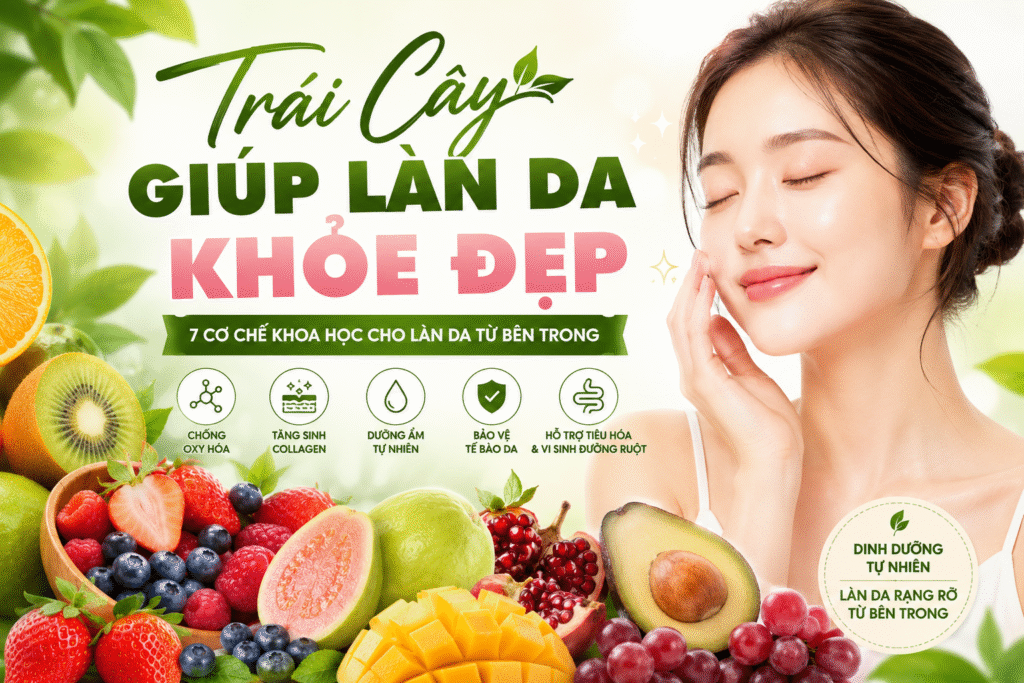
Many people think beautiful skin mainly comes from expensive serum, retinol, or collagen peptides. However, the skin is actually a biological metabolic organ, and daily nutritional quality is the factor that most deeply affects skin structure in the long term. A diet rich in fresh fruits can directly affect the collagen matrix, oxidative stress, hydration balance, gut microbiome, and glycation rate — the core mechanisms related to skin aging.
According to data from the American Academy of Dermatology, the intrinsic aging process of the skin begins to accelerate noticeably after the age of 25, when natural collagen synthesis decreases by approximately 1–1.5% each year. Meanwhile, research published in The Journal of Clinical and Aesthetic Dermatology shows that people whose diets are rich in carotenoids, vitamin C, and polyphenols often have significantly lower wrinkle density than those who consume fewer fruits and vegetables.
Interestingly, many compounds found in fruits do not work as “instant beauty solutions,” but instead participate in very specific biological pathways. For example:
- Vitamin C supports collagen hydroxylation
- Anthocyanins help reduce ROS-induced damage
- Polyphenols help reduce inflammatory cytokines
- Beta-carotene supports epidermal turnover
- Fiber supports the gut-skin axis
- Vitamin E helps protect the phospholipid membrane
That is why dietary patterns such as the Mediterranean Diet, Okinawa Diet, and Nordic Diet all share one common characteristic: very high fruit and phytonutrient intake.
In a dermatology nutrition trend survey compiled by Wunjo from multiple nutrition & healthy lifestyle reports during 2024–2025, people who maintained the habit of eating at least 400–600g of fresh fruit per day tended to show stronger interest in skin hydration, anti-aging nutrition, and healthy collagen support rather than relying solely on topical cosmetics.
How Fruits Help Keep Skin Healthy and Beautiful Through Biological Mechanisms
The skin does not only reflect age but also reflects the body’s metabolic condition. When the body experiences prolonged oxidative stress, reactive oxygen species (ROS) levels increase and damage collagen, elastin, membrane lipids, and keratinocyte DNA.
In reality, the skin continuously faces:
| Factors | Biological Effects |
|---|---|
| UV rays | Increase ROS and MMPs |
| PM2.5 pollution | Increase cellular inflammation |
| Sleep deprivation | Reduce collagen recovery |
| Refined sugar | Increase glycation |
| Chronic stress | Increase cortisol |
| Dehydration | Increase TEWL |
What is noteworthy is that many plant compounds in fruits can directly participate in these protective mechanisms.
For example:
- Vitamin C participates in type I collagen synthesis
- Vitamin E protects the phospholipid membrane
- Anthocyanins help prevent lipid peroxidation
- Flavonoids help reduce inflammatory signaling
- Carotenoids support photoprotection
- Prebiotic fiber supports microbiome diversity
A study involving more than 2,700 women in Australia found that women who consumed higher amounts of fruit had significantly better skin elasticity and skin brightness compared to those who consumed fewer fruits and vegetables.

Vitamin C Supports Collagen Synthesis And Reduces Skin Aging – Why Is Vitamin C Directly Related To Skin Elasticity?
Collagen is a structural protein that makes up approximately 70–80% of the dermis, while vitamin C is an important cofactor for the enzymes prolyl hydroxylase and lysyl hydroxylase — the two enzymes responsible for stabilizing the triple-helix collagen structure.
Simply put:
Without enough vitamin C, the body cannot produce collagen effectively.
When fibroblasts lack vitamin C:
- Collagen synthesis decreases
- Wound healing becomes slower
- Skin firmness declines
- Wrinkles appear faster
A study published in the American Journal of Clinical Nutrition found that women with higher vitamin C intake often had:
- Less wrinkle appearance
- Lower skin dryness
- Lower rates of photoaging
Fruits That Help Keep Skin Healthy and Beautiful With High Vitamin C Content
| Fruit | Vitamin C (mg/100g) | ORAC Score |
|---|---|---|
| Guava | 228 mg | ~4962 |
| Kiwi | 92 mg | ~1210 |
| Strawberry | 59 mg | ~4302 |
| Orange | 53 mg | ~1819 |
| Dragon fruit | 20–25 mg | ~2036 |
Interestingly, guava contains about 4–5 times more vitamin C than oranges. Just 100g of guava nearly fulfills the Recommended Daily Intake for adults.
Besides collagen, vitamin C is also associated with:
- Reducing melanin oxidation
- Supporting skin regeneration
- Reducing inflammatory markers
- Helping protect against UV-induced damage
That is why many nutrition experts encourage incorporating vitamin C-rich fruits into breakfast or daily snacks instead of depending only on supplements.
Vitamin E Functions Like An “Antioxidant Shield”
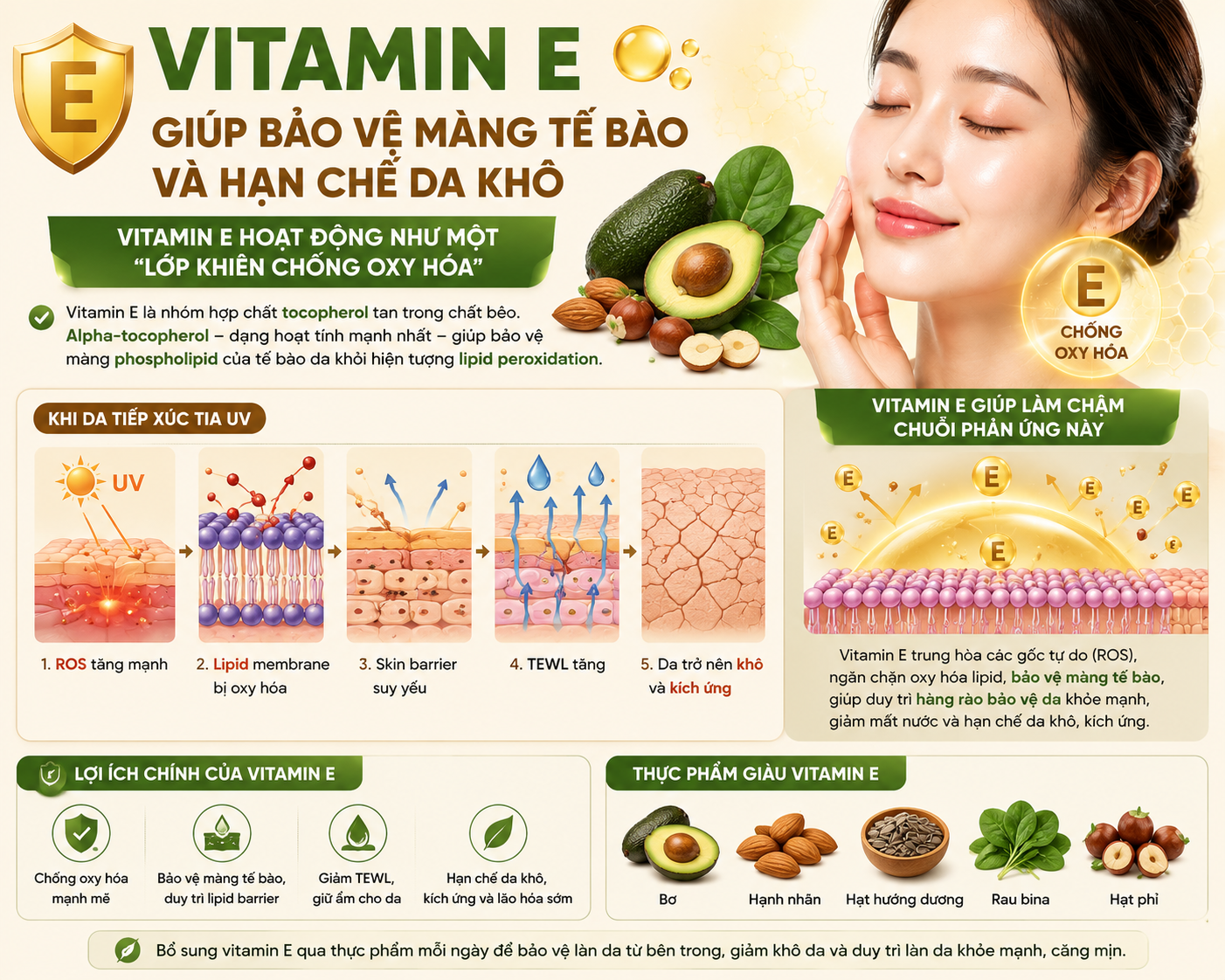
Vitamin E is a group of fat-soluble tocopherol compounds. Alpha-tocopherol — the most active form — helps protect skin cell phospholipid membranes from lipid peroxidation.
When the skin is exposed to UV rays:
- ROS increases sharply
- Lipid membranes become oxidized
- The skin barrier weakens
- TEWL increases
- The skin becomes dry and irritated
Vitamin E helps slow down this chain reaction.
Image alt text: “Vitamin E – How Fruits Help Keep Skin Healthy and Beautiful”
Fruits With Notable Vitamin E Content
| Fruit | Vitamin E |
|---|---|
| Avocado | 2.1 mg/100g |
| Kiwi | 1.5 mg/100g |
| Mango | 0.9 mg/100g |
| Raspberry | 0.87 mg/100g |
Avocados are especially notable because they contain:
Vitamin E, Oleic acid, Phytosterols, Glutathione, and Lutein.
Oleic acid helps strengthen the skin lipid barrier, while glutathione supports the body’s antioxidant network.
According to USDA data, approximately 77% of avocado calories come from monounsaturated fats (MUFA) — lipids that are beneficial for cell membranes.
Vitamin C And Vitamin E Work Together Through An “Antioxidant Network”
What many people do not know is that vitamin C and vitamin E work synergistically. The mechanism works as follows:
- Vitamin E neutralizes ROS
- Vitamin E becomes oxidized
- Vitamin C regenerates vitamin E back into its active state
That is why many nutrition experts call this combination:
“The Antioxidant Recycling System”
A smoothie made with mango, kiwi, and strawberries is not only delicious but also creates very strong antioxidant synergy.
Beta-Carotene And Provitamin A Support Epidermal Renewal – What Is Beta-Carotene?
Beta-carotene is a carotenoid pigment responsible for the yellow, orange, or red colors in many fruits.
- The body uses the enzyme beta-carotene dioxygenase to convert beta-carotene into: Retinal, Retinol, and Retinoic acid.
- Retinoic acid is a biologically active compound directly related to: Epidermal turnover, Keratinocyte differentiation, Sebum regulation, and Skin renewal.
Image alt text: “Vitamins In Fruits That Help Keep Skin Healthy and Beautiful”
Fruits Rich In Beta-Carotene
| Fruit | Beta-Carotene |
|---|---|
| Cantaloupe | ~2020 mcg |
| Mango | ~640 mcg |
| Papaya | ~274 mcg |
| Apricot | ~1094 mcg |
Some observational studies show that people with higher plasma carotenoid concentrations often have:
- Healthier skin tone
- Less dullness
- Lower UV damage rates
Many scientists call this effect:
“Carotenoid Glow”
Can Carotenoids Function Like “Internal Sunscreen”?
Not entirely, but carotenoids do support photoprotection to a certain extent. A study in Germany showed that participants supplementing carotenoids continuously for 10–12 weeks had slightly higher MED (Minimal Erythema Dose) compared to the control group. This means the skin had somewhat better UV tolerance. However, carotenoids do not replace sunscreen.
Polyphenols And Flavonoids Support Antioxidant Protection And Reduce Inflammation – Why Are Polyphenols Considered “Anti-Aging Compounds”?
Skin aging is strongly associated with oxidative stress and chronic low-grade inflammation.
Polyphenols help:
- Neutralize free radicals
- Reduce NF-kB activation
- Reduce inflammatory cytokines
- Support mitochondrial protection
Notable polyphenol groups include:
| Compound | Source |
|---|---|
| Resveratrol | Red grapes |
| Quercetin | Apples |
| Catechin | Berries |
| Hesperidin | Citrus fruits |
| Punicalagin | Pomegranate |

Red Grapes And Resveratrol
Resveratrol is one of the most extensively studied polyphenols in anti-aging science.
Some studies suggest resveratrol may:
- Reduce MMP expression
- Support collagen preservation
- Reduce oxidative DNA damage
- Support mitochondrial function
MMPs are enzymes that destroy collagen after UV exposure.
This explains why diets rich in berries and grapes are often associated with healthy aging.
Anthocyanins Help Protect Skin Cells Against Oxidative Stress – Anthocyanins Are The Most Powerful “Antioxidant Pigments” In Berries
Anthocyanins create the purple, red, or dark blue colors found in:
- Blueberries
- Black cherries
- Purple grapes
- Black raspberries
What is remarkable is that anthocyanins have very high ORAC scores.
| Fruit | ORAC Score |
|---|---|
| Blueberries | ~4669 |
| Black raspberries | ~5347 |
| Black cherries | ~3365 |
Anthocyanins help:
- Reduce ROS
- Reduce lipid oxidation
- Support collagen stability
- Reduce inflammatory signaling
Berries And The “Healthy Skin Diet”
In a healthy eating trend survey referenced by Wunjo from 2025 wellness retail reports, berries continued to rank among the top products consumers were most interested in within the “beauty nutrition” segment.
This is not surprising because berries have:
- High phytonutrient density
- Low glycemic load
- High fiber
- Strong antioxidant capacity
These fruits are especially suitable for:
- People who stay up late
- People under high stress
- Office workers
- People exposed to significant blue light
Image alt text: “Berries And Healthy Skin Diet – How Fruits Help Keep Skin Healthy and Beautiful”
The Water Content In Fruits Helps Maintain Skin Hydration – Dehydrated Skin Is Not Only Caused By Lack Of Moisturizer
Many people carefully follow skincare routines yet still experience dull and dry skin because of poor internal hydration.
When the body lacks water:
- Blood circulation decreases
- TEWL increases
- The skin barrier weakens
- The skin loses firmness
Fruits With High Water Content
| Fruit | Water Content |
|---|---|
| Watermelon | 91–92% |
| Strawberries | 90–91% |
| Oranges | 86–87% |
| Dragon fruit | 84–87% |
Besides water, these fruits also contain:
- Potassium
- Magnesium
- Organic acids
- Natural electrolytes
This helps improve hydration more effectively than sugary soft drinks.
How Are Fiber And The Gut Microbiome Related To Skin Health?
The Gut–Skin Axis is currently one of the most discussed topics in modern dermatology. Many studies show that the gut microbiome is directly linked to skin inflammation, acne, rosacea, and inflammatory skin conditions. When the microbiome becomes imbalanced, endotoxins, inflammatory cytokines, and oxidative stress all tend to increase — negatively affecting the skin.
One of the most important factors supporting a healthy microbiome is fiber from fruits.
| Fruit | Fiber Content |
|---|---|
| Avocado | 6.7 g |
| Guava | 5.4 g |
| Pear | 3.1 g |
| Dragon fruit | ~3 g |
Soluble fiber helps nourish beneficial bacteria such as Lactobacillus and Bifidobacterium. These beneficial bacteria produce SCFAs like butyrate — compounds that support the immune barrier and help reduce inflammatory responses in the body.
Conclusion
Healthy and beautiful skin does not come from a single active ingredient but from the combination of dozens of biological mechanisms. Vitamin C supports collagen. Anthocyanins support antioxidant protection. Polyphenols support anti-inflammatory activity. Fiber supports the gut microbiome. Water content supports internal hydration.
That is why people who maintain a diet rich in colorful fruits often have:
- Better skin brightness
- More stable skin elasticity
- Lower rates of dull skin
- Slower aging
A balanced diet rich in fresh fruits, adequate sleep, stress reduction, and consistent sun protection remain the most sustainable foundation for long-term healthy skin.
FAQ – How Fruits Help Keep Skin Healthy and Beautiful
1. Which Fruits Help Keep Skin Healthy and Beautiful the Fastest?
The most notable fruits that help keep skin healthy and beautiful are usually guava, kiwi, blueberries, oranges, and avocados because they are rich in vitamin C, anthocyanins, and polyphenols that support collagen and antioxidant protection.
2. Is Eating Fruits That Help Keep Skin Healthy and Beautiful Really Effective?
Eating fruits regularly may support brighter and healthier skin, reduce oxidative stress, and improve elasticity thanks to vitamins, antioxidants, and high natural water content.
3. Through What Mechanisms Do Fruits Help Keep Skin Healthy and Beautiful?
Fruits help maintain healthy and beautiful skin through mechanisms such as supporting collagen synthesis, reducing cellular inflammation, providing antioxidant protection, and maintaining skin hydration.
4. When Is The Best Time To Eat Fruits That Help Keep Skin Healthy and Beautiful?
You should eat fruits in the morning or mid-afternoon so the body can absorb vitamins and antioxidants more effectively while also supporting better energy metabolism.
5. Do Fruits That Help Keep Skin Healthy and Beautiful Help Reduce Acne And Slow Aging?
Many fruits rich in anthocyanins, vitamin C, and fiber may help support inflammation reduction, antioxidant protection, and slower skin aging from within.
