Tiếng Việt
 Русский
POLICY
Vietnamese Fresh Fruits – Fresh Flavor, Global Standards
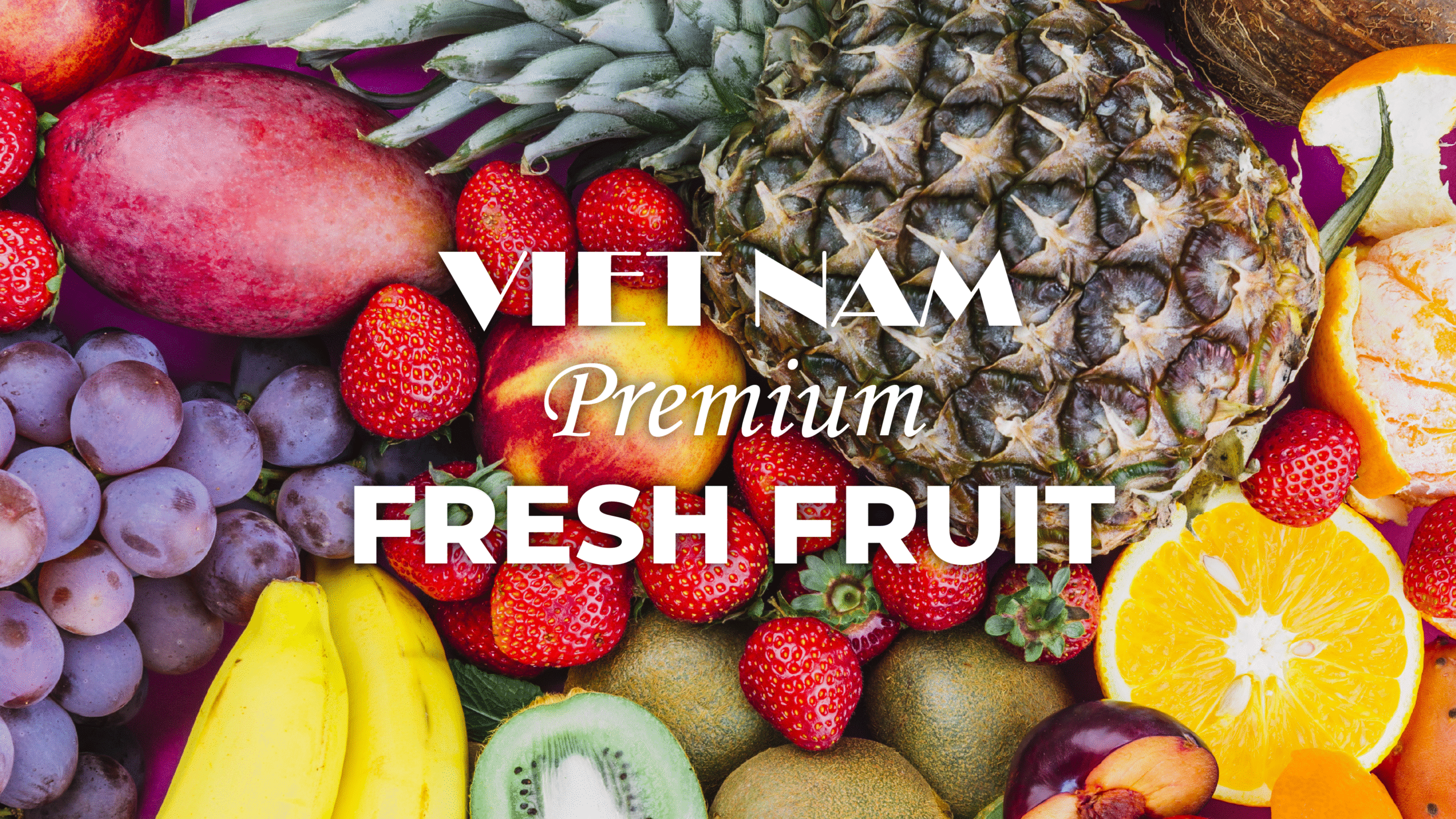
Vietnamese Fresh Fruits – Fresh Flavor, Global Standards represents the perfect harmony of tropical climate, nutrient-rich alluvial soil, and traditional cultivation techniques. Thanks to ideal natural conditions, Vietnamese fruits possess outstanding aroma, high sweetness, vibrant colors, and exceptional nutritional value—an advantage few countries can match.
Not only delicious and fresh, Vietnamese fruits today are also produced under international standards such as VietGAP, GlobalG.A.P, ISO 22000, HACCP, and FDA. Strict control from farming areas to harvesting and packaging enables Vietnamese produce to confidently enter demanding markets such as the USA, EU, Japan, Korea, and the Middle East. This affirms the rising position of Vietnamese fruits on the global export map.
Why Do Vietnamese Fruits Have a “Fresh Flavor” and Export Advantages?
Vietnamese fruits possess superior flavor thanks to ideal tropical ecological conditions:
- Average temperature of 25–27°C,
- Annual rainfall of 1,800–2,000 mm,
→ Enhancing photosynthesis, increasing sugar, organic acids, and aromatic esters.
Differences in regional microclimates create unique sensory profiles:
- Mekong Delta: Alluvial soil pH 5.5–6.5 → mangoes and longans with Brix levels +1.5°Bx higher than regional averages.
- Central Highlands: Cool nights → durians and avocados rich in aromatic esters.
- Northern Vietnam: Large day-night temperature difference → lychees high in anthocyanin, creating bright red color.
Typical example:
- Cao Lanh mango: 16–18°Bx
- Thai mango: ~14°Bx
→ Vietnamese mangoes have a sweeter, richer taste and longer aftertaste.
A Wunjo taste survey (2024–2025) in Singapore, Japan, and the EU recorded that 83% of consumers described Vietnamese mangoes as “sweet and strongly aromatic.”
Commercial value of Vietnamese fruits:
- First 10 months of 2025: Vietnam’s fruit & vegetable exports exceeded USD 7 billion, up 14% YoY.
- Durians alone reached nearly USD 3.3 billion in 2024, accounting for almost 50% of the industry.
→ Fresh flavor + high standards = strong export competitiveness.
Key Vietnamese Fresh Fruits & Their Characteristics (with Quality Indicators)
Below is a summary table based on farming regions, seasons, Brix levels, post-harvest treatment, and certifications:
| Fruit | Main Growing Regions | Season | Brix Level | Post-Harvest Treatment | Standards |
|---|---|---|---|---|---|
| Ri6 Durian | Dak Lak, Lam Dong | May–October | 28–32°Bx | Frozen at −40°C | GLOBALG.A.P., HACCP |
| Cat Chu Mango | Dong Thap, Tien Giang | March–August | 16–18°Bx | Heat treatment 46°C / 10 minutes | VietGAP, ISO 22000 |
| Dragon Fruit | Long An, Binh Thuan | Year-round | 13–15°Bx | Irradiation 400–600 Gy | HACCP, Phytosanitary |
Quick explanations:
- Brix level → determines sweetness and overall sensory quality.
- Post-harvest treatment → extends shelf life.
- Certifications → required to enter premium markets.
Potential fruit groups:
- Bac Giang lychee: ~350 mg/kg anthocyanin
- Tien Giang mangosteen: ~0.8% tannin
- MD2 pineapple: ~25 mg vitamin C / 100g
→ Excellent for EU/UK markets due to color, aroma, and nutrition.
International Standards & Market Requirements (MRL – Traceability – GlobalG.A.P.)
Standards are the global passport for Vietnamese fruits.
Main certification systems:
- GLOBALG.A.P. – recognized in over 130 countries
- ISO 22000:2018 – food safety management integrating HACCP
- VietGAP – food safety, environment, traceability
MRL – Maximum Residue Limits:
- The EU applies a strict default limit of 0.01 mg/kg (0.01 ppm) for unlisted pesticides.
→ Requires rigorous control and LC-MS/MS testing.
Traceability:
- Fruits must have planting area codes, packing house codes, QR codes – GS1 – GTIN.
- Tien Giang province: 20,440 ha granted planting codes (284 codes).
Market-specific requirements:
- USA: Irradiation 400–600 Gy for 7 approved fruits.
- EU/UK: Strict MRL + full traceability.
- Japan/Korea: Strong pest control measures.
- China: Largest market, especially for durian.
“Fresh-Chain” Cold Supply Chain
Freshness depends on a fully controlled cold chain:
Harvesting
- Mango: ~85% ripeness, firmness 7–8 kgf/cm²
- Dragon fruit: peel color index L ≥ 35
- Durian: 70–75% stem dryness
Rapid Cooling – Pre-cooling
| Item | Value | Impact |
|---|---|---|
| Pre-cooling | 8–10°C within 4 hours | Preserves aroma – reduces moisture loss |
| Cold storage | 85–90% RH | Maintains structure |
| MAP | Optimized O₂/CO₂ levels | Extends shelf-life 2–3× |
| Frozen durian | −40°C | Preserves cell structure |
Transportation:
- Reefer containers: 12–28 days (EU – China – Russia)
- Air freight: 1–3 days (Japan – Korea – Singapore)
Freshness loss can remain under 3% with proper temperature control.
International Markets: Opportunities & Unlocking Strategies
Global demand for tropical fruits continues to rise, accounting for 38% of the global fruit market.
Key export destinations:
- USA
- EU/UK
- Japan – Korea
- China
- Singapore – Middle East
Export structure (2023):
- China: 65.5%
- USA: 4.5%
- Korea: 4.0%
- Japan: 3.2%
- Netherlands: 2.6%
Challenges & Upgrade Solutions for Vietnam’s Fruit Industry
Current limitations:
- Small-scale farming (<2 ha/household) → inconsistent quality.
- Lack of synchronized cold storage and pre-cooling.
- High logistics costs.
Recommended solutions:
- Develop 500–1,000 ha cluster growing regions with digital farming records & MRL control.
- Invest in deep processing (FD, VF, SD) to increase value 3–5×.
- Leverage FTAs (EVFTA, CPTPP, UKVFTA) to access premium markets.
Future trend: From “volume” to “value”
Vietnam is positioned to become a tropical agricultural hub of Southeast Asia, with:
- Strong FTA network
- Competitive costs
- Increasingly professional supply capability
Technologies enhancing value:
- Blockchain traceability
- IoT cold-chain monitoring
- LC-MS/MS testing
- MAP packaging
- Climate-resilient breeding
Fresh flavor in Vietnamese fruits results from climate, micro-regions, production processes, international standards, and modern cold-chain systems.
The combination has enabled Vietnam’s fruit & vegetable sector to surpass USD 7 billion in 2025, with durian alone reaching USD 3.3 billion—solidifying Vietnam’s global position.
FAQ
1. Why are Vietnamese fruits considered “better tasting” than many other countries?
- Because the tropical monsoon climate, large day-night temperature variation, alluvial soil, and native varieties help fruits accumulate sugars, organic acids, and aromatic esters. Vietnamese mangoes often reach 16–18°Bx, higher than Thai/Philippine varieties.
2. Which markets import the most Vietnamese fruits?
- Top 5 markets: China, USA, Korea, Japan, EU/UK.
China accounts for ~65% of total value; the USA prefers dragon fruit, mango, rambutan; EU/UK favor pineapple, dragon fruit, passion fruit.
3. Which Vietnamese fruits have the fastest export growth in 2024–2025?
- Durian (strongest growth, USD 3.3 billion in 2024).
- Banana (steady growth to Korea, China).
- Red-flesh dragon fruit, fresh mango, MD2 pineapple, and pomelo recovering strongly in EU & Middle East markets.
4. Why has Vietnamese durian boomed in exports recently?
- Due to official export access to China, strong demand, favorable pricing, geographic proximity, and year-round production. Ri6, Dona, and Monthong varieties fit Asian consumer preferences.
5. What requirements must Vietnamese fruits meet to export to EU/UK?
- GLOBALG.A.P.
- MRL below 0.01 mg/kg (very strict)
- Full traceability
- LC-MS/MS testing reports
- EU-compliant packaging and labeling
→ A challenging but high-value market.
6. Which Vietnamese fruits are approved for official import into the USA?
- Seven fruits are approved:
Mango, longan, lychee, dragon fruit, rambutan, star apple, pomelo.
Irradiation 400–600 Gy and phytosanitary certificates are required.
7. Have logistics costs affected Vietnamese fruit exports in 2024–2025?
Yes — sea freight and cold-chain costs have increased by 15–30% depending on route, especially to EU/US.
- Cold-chain optimization
- Container sharing
- Using road transport into China to reduce costs
→ These factors significantly affect FOB/CIF prices.
8. Why is MRL the biggest challenge when exporting to the EU?
- The EU has the strictest MRL regulations globally, with most defaulting to 0.01 mg/kg. Any violation may lead to rejection or special monitoring. Producers must keep digital logs, conduct LC-MS/MS tests, and follow clean farming.
9. What are the major global fruit consumption trends for 2025?
- Growing demand for tropical fruits (mango, durian, passion fruit).
- Preference for clean, sustainable, traceable products.
- Rising consumption of ready-to-eat, pre-cut, and premium fruits.
- High demand for MD2 pineapple, naturally ripened mango, ready-to-eat avocado.
10. What is the outlook for Vietnam’s fruit industry in the next 5 years?
Very promising:
- Expected to reach USD 10 billion by 2030.
- China, EU, Japan, Korea will expand import quotas.
- More FTAs supporting 0% tariff access.
- Strong investment in cold storage, pre-cooling, irradiation, and deep processing for sustainable growth.